|
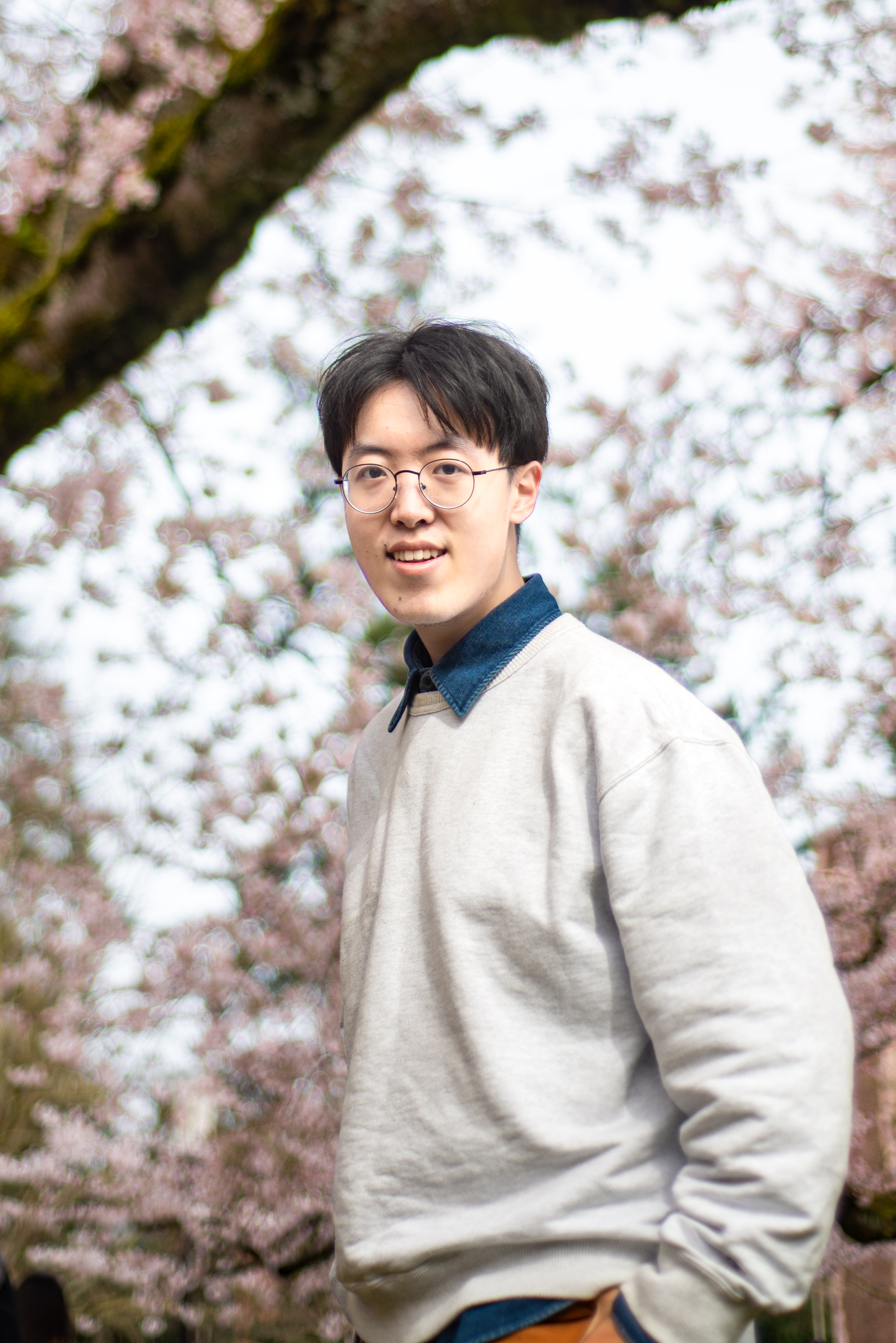
Hi👋! I'm a fourth-year CS Ph.D. student at Stanford, fortunate to be advised by Prof. Jiajun Wu. Previously, I got my bachelor's degree at Zhejiang University, working with Prof. Xiaowei Zhou and Prof. Sida Peng. My research is in part supported by an NVIDIA Graduate Fellowship.
Email: X × Y, where X = {gengchen}, Y = {@cs.stanford.edu}
|
|
|
|
|
|
|
|
|
For the comprehensive list, check out my Google Scholar page.
|
Chen Geng*, Guangzhao He*, Yue Gao*, Yunzhi Zhang, Shangzhe Wu, Jiajun Wu CVPR 2026 [Paper] [Project Page] [Code] tl;dr: We turn any static 3D shape into an interactable 4D asset with a neural simulator built on the minimal inductive bias of Lagrangian mechanics. |
|

|
Yanzhe Lyu^*, Chen Geng*, Karthik Dharmarajan, Yunzhi Zhang, Hadi Alzayer, Shangzhe Wu, Jiajun Wu CVPR 2026 [Paper] [Project Page] tl;dr: We propose a universal pipeline for generating 4D scenes composed of dynamic objects by distilling from video generative models. |
|
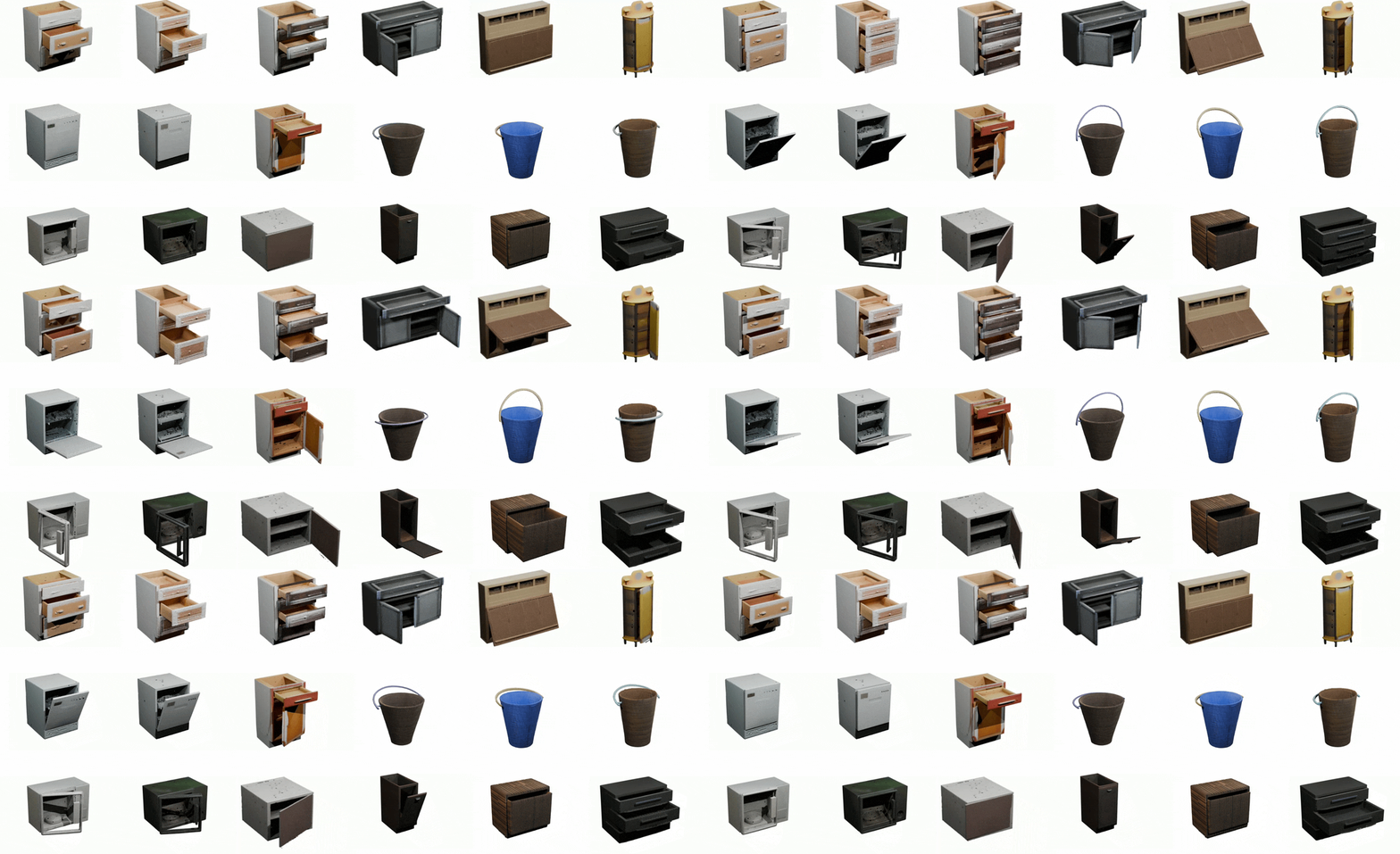
Zizhang Li, Cheng Zhang, Zhengqin Li, Henry Howard-Jenkins, Zhaoyang Lv, Chen Geng, Jiajun Wu, Richard Newcombe, Jakob Engel, Zhao Dong CVPR 2026 [Paper] [Project Page] tl;dr: A transformer-based model for reconstructing articulated dynamic objects from images. |
|
Hadi Alzayer, Yunzhi Zhang, Chen Geng, Jia-Bin Huang, Jiajun Wu CVPR 2026 [Paper] [Project Page] tl;dr: Multi-view image editing by sampling from two diffusion models of different modalities concurrently. |
|
|
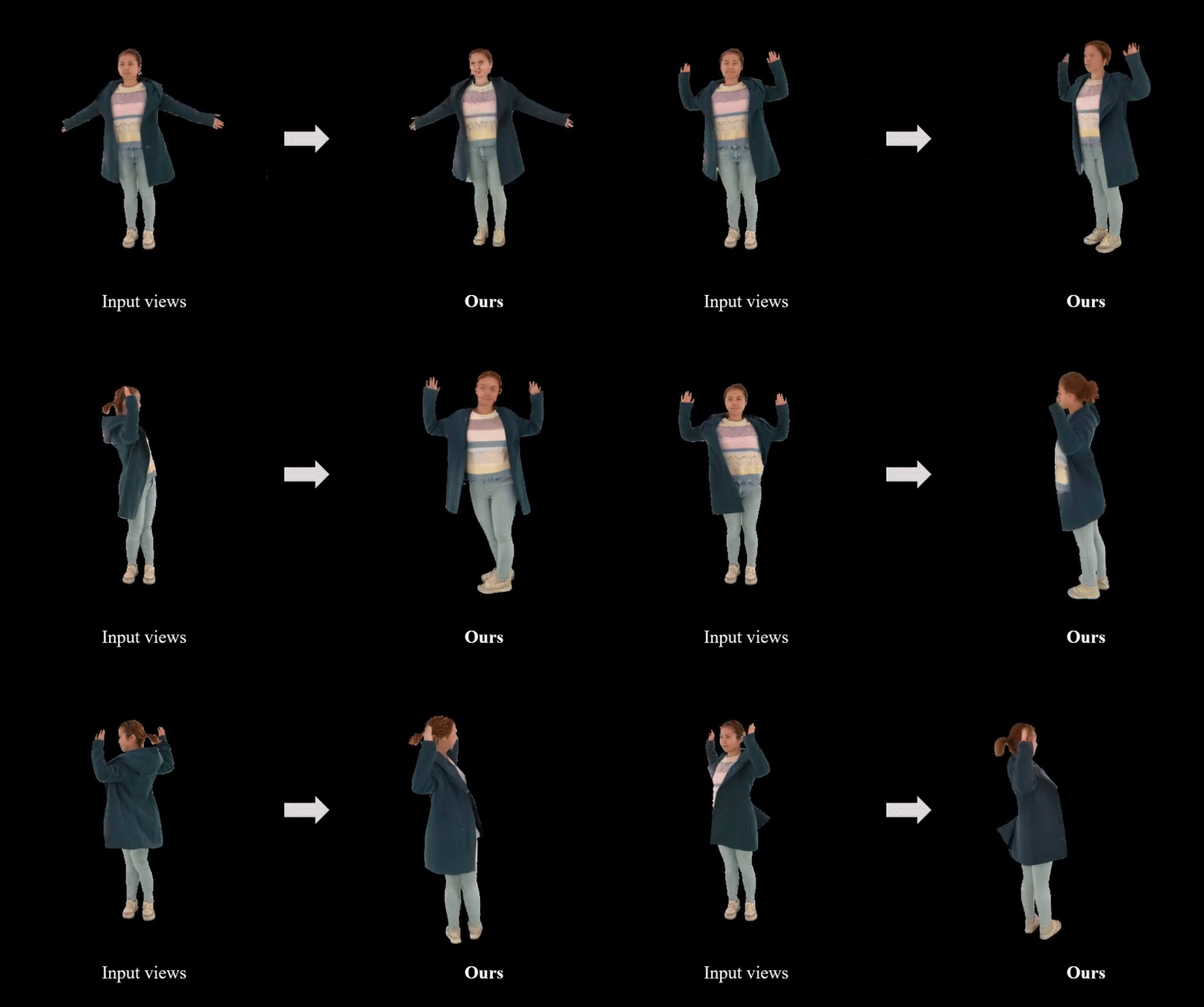
Youngjoong Kwon, Yao He*, Heejung Choi*, Chen Geng, Zhengmao Liu, Jiajun Wu, Ehsan Adeli ICLR 2026 [Paper] [Project Page] tl;dr: A feed-forward method for human performance capture that progressively updates a canonical space with incoming monocular RGB frames, using probabilistic regression to produce sharp novel-view renderings. |
|
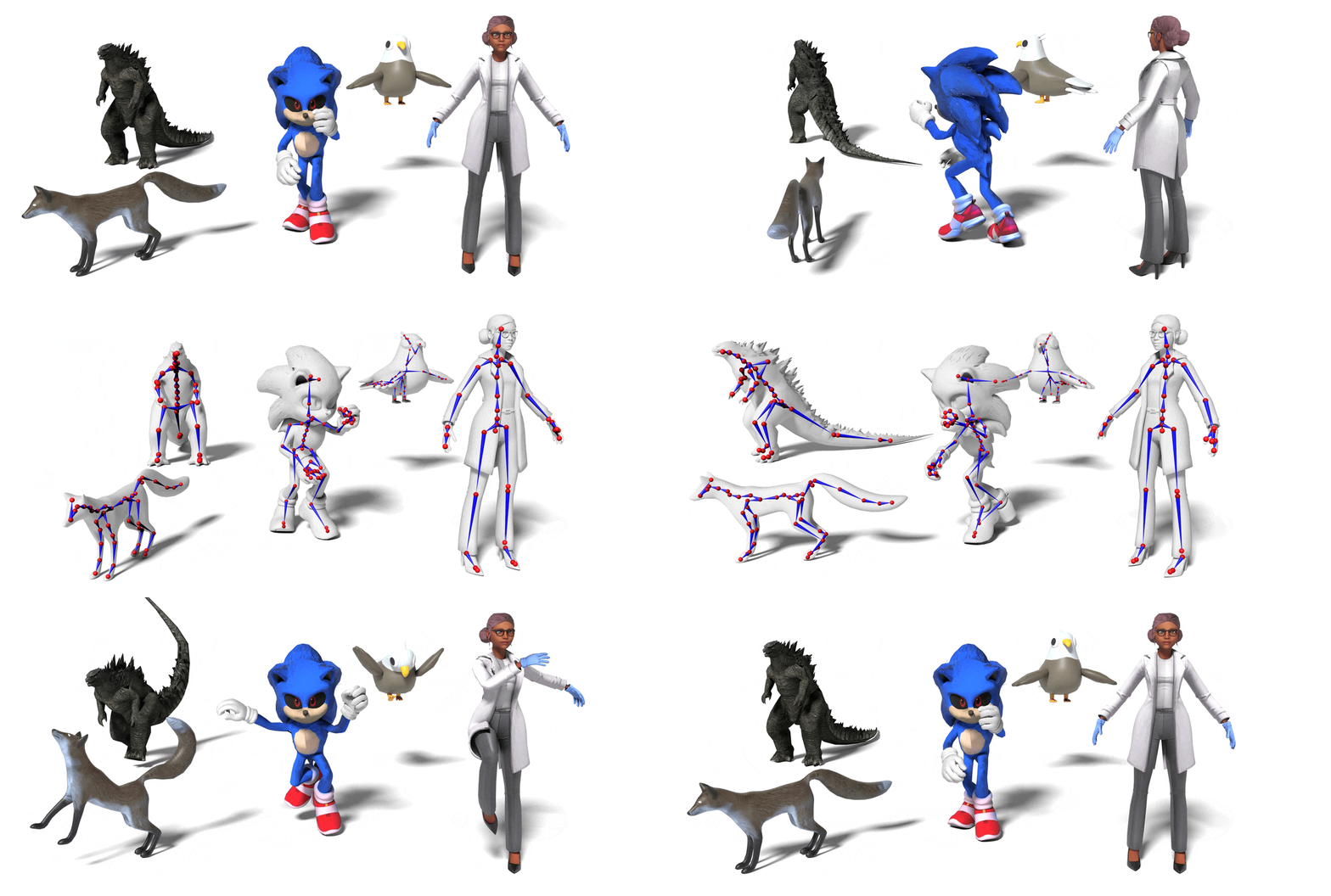
Yufan Deng^*, Yuhao Zhang^*, Chen Geng, Shangzhe Wu†, Jiajun Wu† SIGGRAPH 2025 [Paper] [Project Page] [Demo] [Code] [arXiv] tl;dr: We propose a dataset and benchmark for supervised-learning-based 4D object rigging methods. |

|
Guangzhao He^*, Chen Geng*, Shangzhe Wu, Jiajun Wu CVPR 2025 [Paper] [Project Page] [arXiv] tl;dr: We discover animatable motion subspaces for any 4D objects. |
|
Chen Geng, Yunzhi Zhang, Shangzhe Wu, Jiajun Wu CVPR 2025 (Oral Presentation, 3.3% of the accepted papers) [Paper] [Project Page] [Code] [arXiv] tl;dr: We generate temporal 4D object intrinsics from 2D foundation models. |
|
|
Zhen Xu, Sida Peng, Chen Geng, Linzhan Mou, Zihan Yan, Jiaming Sun, Hujun Bao, Xiaowei Zhou CVPR 2024 (Highlight, 11.9% of the accepted papers) [Paper] [Project Page] [Code] [arXiv] [Video] tl;dr: We estimate physically based intrinsics of dynamic characters from monocular videos. |
|
|
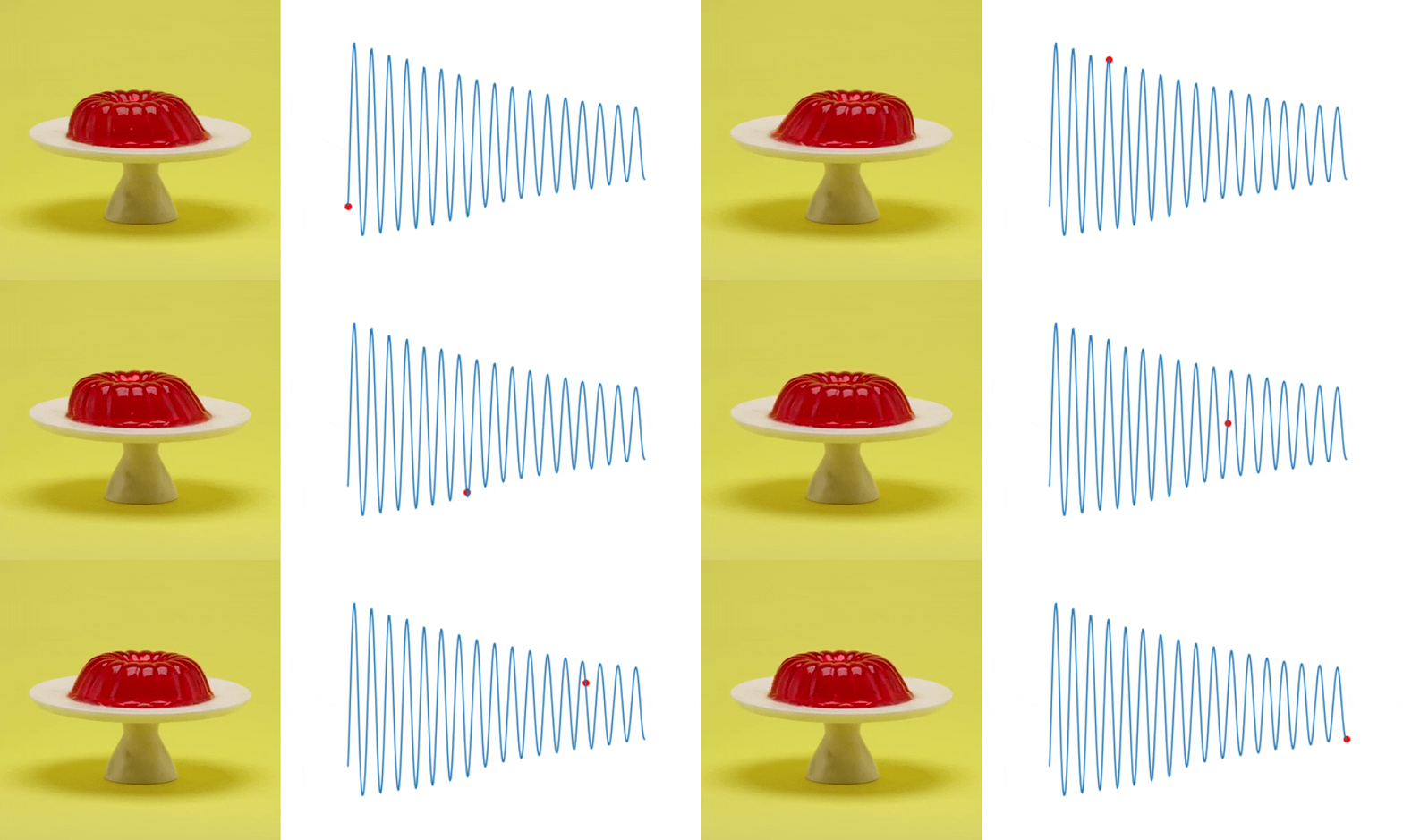
Chen Geng*, Hong-Xing "Koven" Yu*, Sida Peng, Xiaowei Zhou, Jiajun Wu ICLR 2024 [Paper] [Project Page] [Code] [OpenReview] tl;dr: We discover a low-dimensional interpretable motion representation for dynamic scenes with macro motion. |
|
Chen Geng*, Hong-Xing "Koven" Yu*, Sharon Zhang, Maneesh Agrawala, Jiajun Wu ICCV 2023 [Paper] [Project Page] [Video] [Code] [MarkTechPost] tl;dr: We decompose the shading of objects into a tree-structured representation, which can be edited or interpreted by users easily. |
|
|
Chen Geng*, Sida Peng*, Zhen Xu*, Hujun Bao, Xiaowei Zhou CVPR 2023 [Paper] [Project Page] [Code] tl;dr: We accelerate the learning of neural volumetric videos of dynamic humans by over 100 times.
|
|
|
Sida Peng, Chen Geng, Yuanqing Zhang, Yinghao Xu, Qianqian Wang, Qing Shuai, Xiaowei Zhou, Hujun Bao TPAMI 2023 [Paper] [Code] [IEEE Xplore] tl;dr: Our approach reconstruct geometry and appearance of human performers with high accuracy from sparse observations.
|
|
|
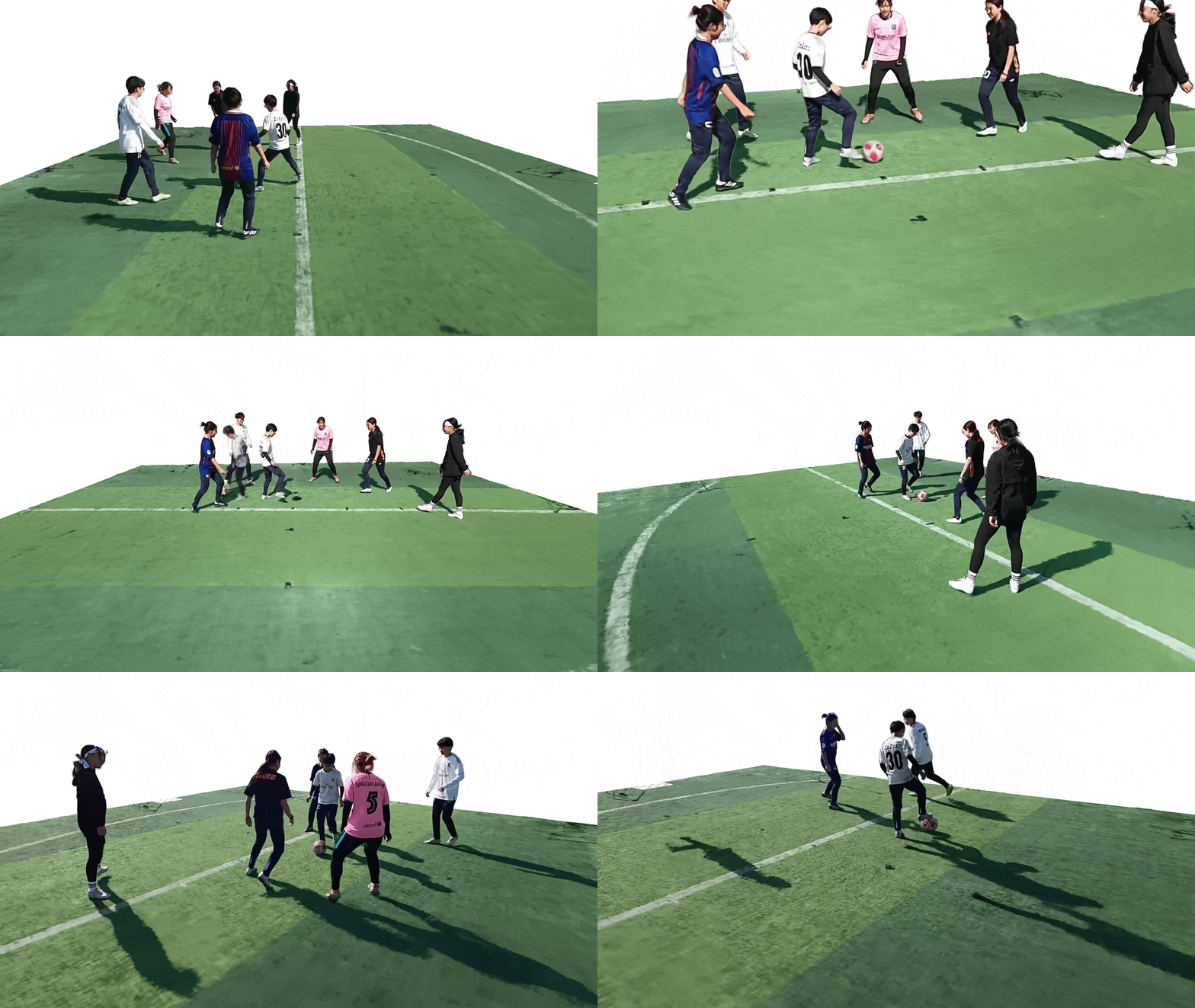
Qing Shuai, Chen Geng, Qi Fang, Sida Peng, Wenhao Shen, Xiaowei Zhou, Hujun Bao SIGGRAPH 2022 (Featured in the technical paper trailer) [Paper] [Bibtex] [Code] [Project Page] tl;dr: Given sparse multi-view videos of crowded scenes with multiple human performers, our approach is able to generate high-fidelity novel views and accurate instance masks.
|
|
|
 |
NVIDIA
June 2026 - Present, Santa Clara, California Research Scientist Intern Hosts: Nicholas Sharp and Donglai Xiang |
 |
Stanford University
Sept 2023 - Present, Stanford, California PhD Candidate in Computer Science Advisor: Jiajun Wu |
 |
Zhejiang University
Sept 2019 - June 2023, Hangzhou, China B.Eng.(Honours) in Computer Science Chu Kochen Honors College (Mixed Class and ACEE) Cumulative GPA: 94.38/100, 3.99/4.0 Major GPA: 96.67/100, 4.0/4.0 Advisor: Xiaowei Zhou and Sida Peng |
|
|
|
|
This website is adapted from this awesome template
|
